


About the region
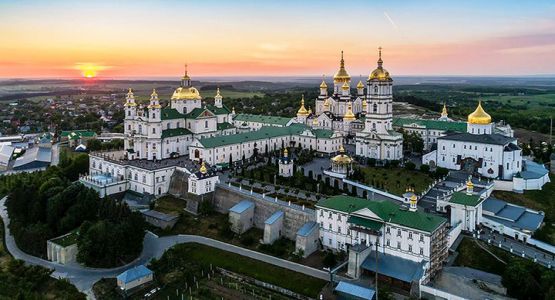
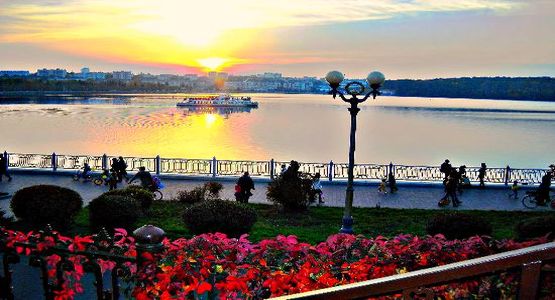
The sources of history of Ternopil Region dates back to the distant times of Kyiv Rus and Galych-Volyn principality. For many centuries the people have been creating the eternal values for the motherland fruitfully preserved traditions, customers and national culture.
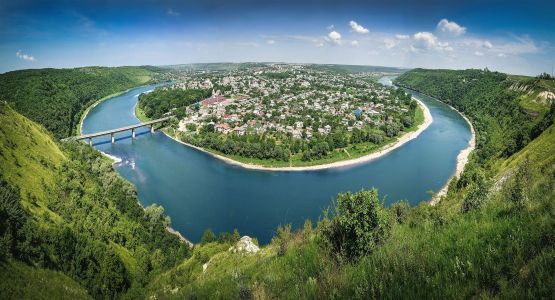
The characteristic sign of nature of Ternopil land is its variety. The flat central part of the region’s territory is surrounded by Kremenets sublimity in the north as well as on the west – Berezhansko-Monastyrsky (Podil) humpbacked mountain, on the east – Avratynska sublimity and on the south it is cut by deep and often canyon-like river valleys of left inflows of the Dniestr River. The central part of the region is crossed from the north-west to the south-east by the Tovtrova chine (Medobory). Ternopil Region was established in 1939. Its area is 13.8 thousand square km that makes 2.3% of the Ukrainian territories. It stretches from the north to south upon 195 km and from the west to east upon 129 km.
The number of regional population is 1180.3 thousand people and it majority lives in the rural locality. By the administrative-territorial division the region is divided into 17 districts with 1052 settlements of regional and district submission, and also with 18 settlements of urban type.
There are a lot of rivers (1650), ponds and reservoirs in the region. In the ancient times a greater part of the regional present territory was covered with deciduous and coniferous forests. The forests have the important value for the present regional economy, however now they occupy only 13 percents of the territory. These are in majority valuable and highly productive oak forests with parcels of lindens, ash-trees, hornbeam, maples and other species and only there are pine, pine-oak and spruce trees within the basins of the Ikva and Viliya rivers. In several spots, ancient oak and beech forests can still be found, consisting of centuries-old exotic elite trees.
The original steppe vegetation, over 1200 species of superior spore and flowering plants has been preserved in Ternopil land, mainly through the Dniestr and Seret banks at the Tovtrova chine, in Kremenets Mountains.
The Ternopil land’s animal complex having been formed under the influence of three zoo-geographical regions – Polissya, Carpathians and Steppe and is represented with forest and steppe fauna. The most widespread here are hares, foxes, roe deer, wild boars, stone and beech martens, squirrels, otters, prairie-dogs, weasels and partridge. There are also ermines, Podil moles, dappled gophers, wild cats, wolves and elks. The dappled deer, wild rabbits and pheasants were brought to forest tracts. Among the resources of the region the leading place is occupied by construction materials and raw material for their production, in particular, high-quality chalk, gypsum, limestones, magnesian lime, marls, sands and peat.
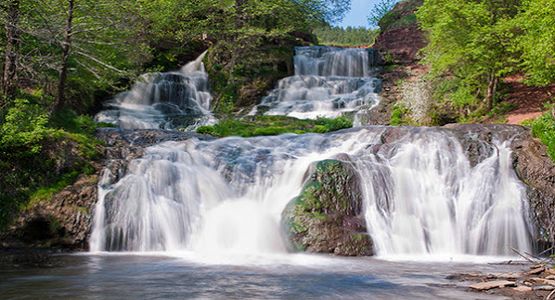
Ternopil land has all conditions for development of tourism and resort economy here. They established the Medobory reserve in the region and three regional landscape parks; 14 national and 103 local sanctuaries are functioning; there are 11 national and 380 local natural sights, 4 tracts; 9 dendrology parks, 13 parks – sights of gardening art and three botanical gardens. The greatest attractions for the tourists are Kremenets Mountains, Medobory, gypsum caverns, Dniestr River canyon and Kasperivsky landscape reserve.
The original landscapes can be found on almost 30 percents of the region’s territory. They have undergone the least changed kind at the territories occupied with forests, bushes, swamps, on open areas covering near 16 percents of the region’s territory. The natural complexes situated on the territories of natural reserves are the best-protected today.
The wonderful natural and recreation descriptions of Ternopil land, relatively favourable ecological situation, well-developed network of railways and highways in the region create good conditions for development of varied resort and sanatorium treatment and tourism.
Such writers as Bohdan Lepky and Ulas Samchuk, composers Denis Sichynsky, Roman Kupchynsky and Mykhaylo Gayvoronsky as well as Mykhaylo Verbytsky, author of national anthem tune, masters of chisel and tassel Mykhaylo Boychuk, Olena Kulchytska and Anton Manastyrsky, magician of stage Les Kurbas and prominent physicist Ivan Pulyuy have made an invaluable contribution to the national and world culture, science, literature and art. World-known singer Solomiya Krushelnytska, whose talent has conquered opera houses stages in Milan, Paris and New York, added to the land’s glory.
Природно-рекреаційний потенціал: 421 територія та об’єкт природно-заповідного фонду, зокрема Державний природний заповідник «Медобори», 89 заказників, 308 пам’яток природи, 18 парків – пам’яток садово-паркового мистецтва, дендропарк у с. Рай, закладений у ХVІІ ст. Сприятливі кліматичні умови, мальовничі ландшафти, ліси, річки, джерела мінеральної води та лікувальні грязі створюють рекреаційні ресурси області. Грунт – переважно різних типів чорнозем.
Транспортна мережа: загальна довжина залізниць – 574 км, автошляхів – 5,6 тис. км, у тому числі з твердим покриттям – 4,8 тис. км. Найбільші залізничні вузли – Тернопіль, Чортків. По Дністру здійснюється судноплавство. У м. Тернополі є аеропорт.
Історико-культурний потенціал: загальна кількість пам’яток історії, археології, містобудування і архітектури, монументального мистецтва в області – 1068.
Найцікавішими об’єктами туризму є Збаразький історико-культурний заповідник, пам’ятки архітектури ХІІ–ХІХ ст. у м. Кременці, Миколаївський собор, ансамбль ліцею, Богоявленський монастир, ансамбль Почаївської лаври, Старий замок, картинна галерея в Тернополі; домініканський костьол ХVІІІ ст.; картинна галерея; найбільша у світі гіпсова печера «Кришталева» з мінеральними джерелами у с. Кривчому.
У Тернополі є 2 театри, обласна філармонія, в області створено державні музеї, зокрема краєзнавчі у Тернополі та Кременці, музей «Молотківська трагедія» в с. Молоткові та ін.
