


About the region
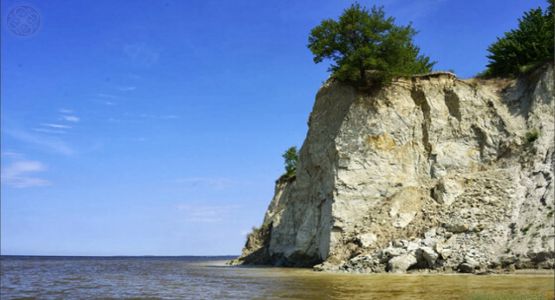
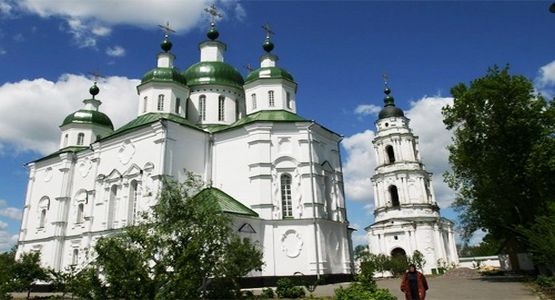
The Poltava land is situated in the Middle Dnieper riverside and is one of those historical regions having become the core of the Ukrainian statehood. Its historic and cultural properties, natural riches and powerful national economic complex play an important role in the state building of independent Ukraine.
The history of this province dates back to the period of centuries depth and the information of archaeological investigations testify to it. At the beginning of the Common Era the present Poltava land was a part of ancient Slavonic tribes settling. In Kyiv Rus times many fortresses have been built on the region’s territory. At the beginning of XVIII century the Poltava land found itself in the center of military events. As a result of the Poltava battle the hope on independence of Ukraine has been lost for a long time. However the Poltava land became the center of motion of the Ukrainian sergeant-majors on defence of their rights. More than 300 settlements have been marked on the Boplan map of the middle of XVIII century within the boundaries of the present Poltava land.
In 1802 the administrative province was established. Its territory was too large. The Poltava province had the lands that later had been passed to many present neighbouring regions.
The region was the center of Chumaks (salt traders) and the various crafts prospered there intensively. The first sugar house has been built in 1828. Due to railway construction (in 1869 Kryukiv was connected with Odessa as well as in 1870 Kremenchuk with Kharkiv) the new industrial enterprises were appeared and the trade has been extended. On the edge of XIX-XX centuries there were already 841 enterprises in the Poltava land.
Exactly on the Poltava land the zemstvos began to be actively formed, and the political motion has been activated at the beginning of XX century. The global processes of industrialization, and also collectivization were taken place, as well as elsewhere, in the conditions of terror and repressions.
For 1923-1937 a few administrative reforms were conducted in the Soviet Union. As a result of one of them on September, 22, 1937 Poltava Region was created in present scopes practically.
The present territory of the region makes 28.8 thousand sq. km. The population is 1610, 9 thousand people.
During 50-70th years of the last century many changes has been taken place in the administrative-territorial division, as a result the Poltava land began to divide into 25 rural districts and 5 cities of regional and 10 cities of district value, 21 settlements, 467 settlement councils and 1848 villages.
Poltava Region was fated to become the spiritual center of Ukraine. In particular, it played the important role in development of the Ukrainian culture and literature. On this blessed land the first Cossack chroniclers Grygoriy Grabyanka and Samiylo Velychko inspirationally worked. From here the prominent Ukrainian philosopher, world-known poet and enlightener Grygoriy Skovorada began to wonder. The outstanding Ukrainian writer Ivan Kotlyarevskiy, who became the beginner of the Ukrainian literature, writing the immortal “Aeneid”, lived and worked there. The great part of members of the Society of Cyril and Methodius was born there. The world view of Mykola Gogol’, Panas Myrny, Yevgen Grebinka, Oles Gonchar, Pavlo Zagrebelny and many other famous writers has been formed there.
The legendary Marusya Churay created her songs in Poltava. The family that gave outstanding composer Petro Tchaikovsky originated there; the prominent Ukrainian composers Yuriy and Platon Mayboroda, Oleksandr Bilash and singer Ivan Kozlovskiy were born there. The song traditions of the Poltava land are continued by prominent our contemporary Rayisa Kyrychenko.
The mathematician Mykhaylo Ostrogradskiy, surgeon Mykola Sklifosovskiy, scientist-ground expert Vasyl Dokuchayev, genius of cosmonautics Yuriy Kondratyuk and many other prominent scientists with the world name went to the glory from the Poltava land. The inhabitants of Poltava Region are proud that the life and creation of such global mental giants as Volodymyr Vernadskiy and Volodymyr Korolenko and world-known teachers Vasyl Sukhomlynskiy and Anton Makarenko is connected with the Poltava land.
Природно-рекреаційний потенціал: Гадяч – кліматичний курорт лісової зони, розташований на березі р. Псел; Ліщинівка – лісовий кліматичний курорт, розташований на березі р. Ворскла; Миргород – рівнинний бальнеологічний і грязьовий курорт лісостепової зони.
169 територій та об’єктів природно-заповідного фонду: 46 заказників, у тому числі 11 державного значення, 92 пам’ятки природи, серед яких – 1 державного значення, Устимівський дендропарк, 20 парків – пам’яток садово-паркового мистецтва, з них 4 державного значення, 10 заповідних урочищ.
Сприятливі кліматичні умови, густа сітка piчок, численні водойми у поєднанні з мальовничими краєвидами, наявність мінеральних вод, відносно невисокий рівень урбанізації формують значний рекреаційний потенціал області.
Транспортна мережа: основні залізничні вузли – Полтава, Кременчук, Гребінка, Ромодан. Поширений автомобільний транспорт. Велике транспортне значення має Дніпро. Річка Сула судноплавна. Повітряні авіалінії зв’язують центр області з іншими великими містами України.
Історико-культурний потенціал: найцікавіші об’єкти туризму – Хрестовоздвиженський собор 1699–1709 рр.; ансамбль Круглої площі та Монумент Слави 1805–1811 рр.; пам’ятник Петру І 1849 р.; Тріумфальна арка 1820 р.; Всіхсвятська церква 1815–1821 рр.; Мгарський монастир ХVІІ–ХІХ ст.; Керамічний технікум 1846 р.; будинок водолікарні 1914– 1917 рр.; Великосорочинський історико-краєзнавчий музей; літературно-меморіальний музей М.В.Гоголя; садиба і парк с. Березова Рудка ХVІІІ–ХІХ ст.; Державний музей-заповідник українського гончарства; фабрика художньої кераміки; державний музей-заповідник М.В.Гоголя; Державний музей-заповідник педагога А.С.Макаренка; Меморіальний комплекс садиби філософа і поета та пам’ятник Г.С.Сковороди; краєзнавчий музей (колишній будинок земства) 1903– 1908 рр.; пам’ятний знак на честь 800-річчя заснування Полтави 1974 р.
Полтава славиться своєю архітектурою XVII-XIX ст. Широко розвинені народні промисли (вишивка, килимарство, кераміка); роботи полтавських майстрів відомі по всьому світу.
